What Proactive Cancer Detection Really Means
Understanding Genetic Cancer Risk With Halo Precision Diagnostics
Hearing the words “cancer risk” is enough to make anyone pause, especially if it’s tied to your genes. Maybe your family has a history of breast, ovarian, or prostate cancer. Maybe a loved one was diagnosed young, or with more than one cancer. And now, your provider is recommending genetic testing.
At NVRA, we know this can bring up a lot of questions and emotions.
- Will testing change anything?
- What if I carry something genetic?
- What will I do with the results?
These are common concerns, and that’s why we’ve partnered with
Halo Precision Diagnostics
to bring our patients access to early cancer detection tools that don’t just screen, but clarify, educate, and empower.
Why Early Detection Matters More Than Many People Realize
The sooner cancer is found, the more treatable it is.
- 1 in 8 women will be diagnosed with breast cancer in their lifetime.
- 1 in 9 men will face prostate cancer.
- 1 in 6 people meet medical guidelines for genetic testing, yet only a fraction ever get tested.
A genetic cancer test can provide clear insight into your inherited risk, helping you and your provider make smarter decisions about screening, prevention, and follow-up care.
Is Inherited Cancer Risk a Factor for You?
If you answer “yes” to any of the following, you may be a good candidate for Halo genetic testing:
- A close relative (parent, sibling, child, grandparent, aunt/uncle) diagnosed with breast, ovarian, prostate, pancreatic, colon, endometrial, or stomach cancer
- Any family member diagnosed with cancer before age 50
- Someone in your family who has had more than one type of cancer
- A history of rare cancers, such as male breast cancer
- You or a relative has tested positive for a known gene variant (like BRCA1 or BRCA2)
Not sure where you stand? A Halo Patient Navigator is available at every NVRA location to help guide you through the evaluation process and answer any genetic testing questions.
Call 203-346-4030 to connect with your Navigator and learn more.
What Halo’s Cancer Genetic Testing Evaluates
Halo Precision Diagnostics focuses on well-established genes that have clear, clinical guidelines tied to them, so if something is found, there’s already a proven path forward.
Commonly evaluated genes include:
- BRCA1 / BRCA2 (linked to breast, ovarian, prostate cancers)
- MLH1, MSH2, MSH6, PMS2 (associated with Lynch Syndrome-related colon cancer)
- PALB2, CHEK2, ATM, and more
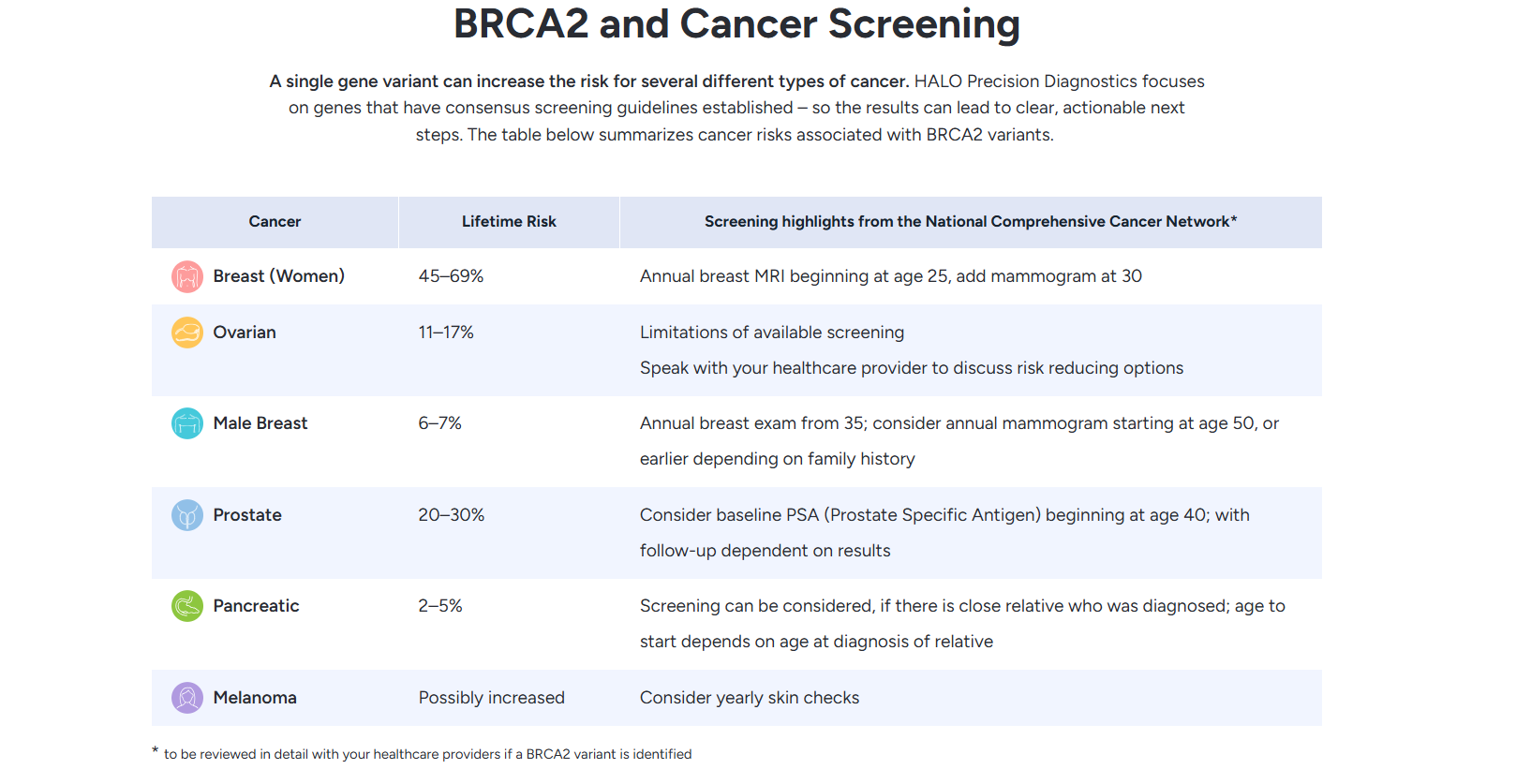
You’ll receive a personalized cancer risk report that’s reviewed with a Halo nurse practitioner, who can help guide your next steps, which may include:
- Starting screenings earlier
- Adding new types of imaging (like breast MRI)
- Referring family members for testing
How the Halo Genetic Health PathWay Works
Step 1: Saliva sample at an NVRA location
Your saliva sample is collected at an NVRA facility by a Halo Patient Navigator. This does not require a separate imaging appointment and can be completed during a dedicated visit arranged through Halo.
Step 2: Genetic analysis
The sample is analyzed by Halo’s lab for inherited genetic variants associated with increased cancer risk.
Step 3: Review results with your provider
In approximately 3–4 weeks (depending on insurance processing), you’ll meet with a Halo nurse practitioner to review your results. Together, you’ll discuss what the findings mean and go over recommended next steps based on your personal risk profile.
Results are shared with your referring provider only if you choose to give permission.
Understanding Your Results
Not all genetic test results are the same. Your report may show:
- Positive (pathogenic) variant: Increased risk of certain cancers
- Negative result: No harmful variants found, but doesn’t eliminate all risk
- Variant of uncertain significance (VUS): Not enough research to classify, no immediate action needed, but tracked over time
NVRA is proud to connect eligible patients to this proactive screening option, but all result interpretation, follow-up, and support are handled directly by Halo’s dedicated care team.
Who Should Consider Proactive Genetic Cancer Testing?
- People with a family history of cancer, especially multiple cases or early diagnoses
- Patients diagnosed with cancer under age 50
- Anyone with relatives who had rare cancers or more than one type of cancer
- Individuals seeking a personalized prevention plan
- Those ready to take a proactive approach to their health
Cost and Insurance Information
Most commercial and federally funded insurance plans do cover genetic cancer testing when medical criteria are met.
If you’re considering testing, a Halo Patient Navigator will walk you through what to expect based on your insurance. They’ll also help verify whether you meet clinical guidelines and explain any costs involved before you move forward with testing.
Questions about cost or coverage? Call Halo’s Navigator Team:
203-346-4030.
Why Patients Choose NVRA for Proactive Cancer Detection Access
Trusted Clinical Partnerships
Our partnership with Halo Precision Diagnostics reflects NVRA’s ongoing commitment to evidence-based, patient-first care, with a focus on proactive screening and prevention.
Locations Near You
With multiple convenient imaging locations across the region, NVRA makes it easy to take the first step toward understanding your cancer risk.
Ask about genetic testing and the Halo program at check-in or during your visit to an NVRA location, or call the Halo Navigator directly at
203-346-4030.
Let’s Take the First Step Together
You don’t have to wait for symptoms.
You don’t have to guess.
And you don’t have to face uncertainty alone.
If you’re ready to learn more about your inherited cancer risk, or if your provider has recommended genetic testing, ask about the Halo Genetic Health PathWay.
Call Halo’s Patient Navigator directly at
203-346-4030 to get started or to see if you qualify.