Echocardiography Explained: How This Non-Invasive Test Helps Assess Heart and Lung Health
When the physician says you need to go for a cardiac test, it is understandable to have questions. Just the word “cardiac” can invoke anxiety in patients as they wonder what the doctor thinks is wrong. At Naugatuck Valley Radiological Associates (NVRA), we know that understanding your cardiovascular health and what scans can show is one of the most effective ways to ease your anxiety and support your long-term health.
Why Being Referred for a Heart Test Can Feel Concerning
It’s natural to feel uneasy when a healthcare provider suggests a specialized imaging test, especially one involving the heart or lungs. The need for diagnostic testing can feel life-changing, but the goal is often to rule out a disease rather than to determine that you have one.
When You’re Sent for Imaging Without Clear Symptoms
When you feel fine, it is normal to wonder why you need a complex test like a heart and lung scan. You may wonder if it is really necessary for you. You don’t have chest pain, and you don’t feel short of breath.
Clinicians tend to be proactive in disease management, and that often means early detection or ruling it out completely. Imaging tests like an echocardiogram let your healthcare team see how these vital organs work, and that tells them a story. It shows them whether everything is working as it should or whether there is cause for further testing and treatment. Either way, it’s critical information to have.
Common Worries About Heart and Lung Scans
When you hear that you need heart imaging, your brain automatically goes to the worst-case scenario—heart attacks or artery blockage. That is one reason a scan is scary for patients. What you need to remember is that imaging tests are predictive tools, meaning they help your physician assess your risk of chronic illness and overall health.
Misconceptions About Invasive Cardiac Testing
There is a misconception about how imaging of the heart and lungs is done, and that can cause some fear, too. Most of the imaging tests, such as the echocardiogram and the coronary calcium scans performed at NVRA, are non-invasive. There are no needles involved in the test, and they are painless.
What Is Echocardiography, and Why Is It Recommended?
An echocardiogram is a cornerstone of modern cardiology. It gives physicians a high-definition window into how the heart works.
What Is Echocardiography, and How Does It Work?
An echocardiogram is an advanced imaging test, but how does it work? To put it simply, this test is an ultrasound of your heart. It uses high-frequency sound waves to create moving images of the heart as it pumps. It is a fast and accurate way to get detailed images of one of your most critical organs.
How Sound Waves Create Detailed Images of the Heart
An echocardiogram creates live pictures of your heart using sound waves. The waves bounce off the heart's structures, such as the valves, as they move, and the data is sent back to a computer that translates it into moving pictures. Those “movies” allow the health care team to see the heart beat and pump blood in real-time.
Why Doctors Order an Echocardiogram
Your healthcare provider might order this non-invasive test if you have risk factors for cardiovascular diseases, such as:
- High blood pressure
- Diabetes
- Family history of heart disease
It is always better to be proactive when it comes to chronic illnesses that impact your health. Whether you are managing an existing condition or ruling out one, the test provides clarity that allows you and your doctor to make an informed health decision.
What Echocardiography Can Reveal About Heart Health
The value of imaging is that it shows the structural components of the heart that might otherwise be missed.
Assessing Heart Structure and Chamber Size
An echocardiogram creates a detailed map of the heart’s anatomy. It allows specialists called radiologists to measure the size of the heart chambers. Enlarged chambers can be a sign of underlying health problems, such as heart failure or complications from high blood pressure. Heart size is a critical measurement to assess overall heart health.
Measuring Blood Flow and Pumping Strength
This advanced imaging test isn’t a snapshot of your heart; it creates a moving picture. That allows radiologists to obtain one of the most critical metrics available: ejection fraction. Ejection fraction is a measurement of how much blood pumps out of the heart with each beat. It indicates the strength of this muscular organ and helps to predict risk factors.
How Echocardiography Supports Lung and Pulmonary Evaluation
An echocardiogram isn’t just a test of the heart. It also provides metrics relevant to your respiratory health.
How Heart and Lung Function Are Closely Connected
The imaging test provides a full picture of both your cardiovascular and your respiratory health. The heart and lungs function together. So, if the heart isn’t pumping efficiently, it causes fluid to build up in the lungs.
Lung disease can also put a strain on the heart. The test may show no structural anomalies in the heart organ, but still indicate it is not functioning well.
Identifying Signs of Pulmonary Hypertension
Echocardiography is the primary tool for detecting signs of pulmonary hypertension, or high blood pressure in the pulmonary arteries. It measures the pressure on the right side of the heart, the side that receives blood to send to the lungs for oxygenation.
The measurement tells radiologists how well the lungs receive that blood. If there is high blood pressure in the arteries of the lungs, the right ventricle must pump harder, and that elevates the pressure.
When Echocardiography Is Part of a Broader Heart and Lung Assessment
Smoking or a sedentary lifestyle can put both the heart and lungs at risk. Your healthcare provider might use this test to get a clear picture of potential organ damage.
What to Expect During Your Echocardiogram
At NVRA, we offer a streamlined experience for patients getting an echocardiogram.
Overview of the Non-Invasive Exam
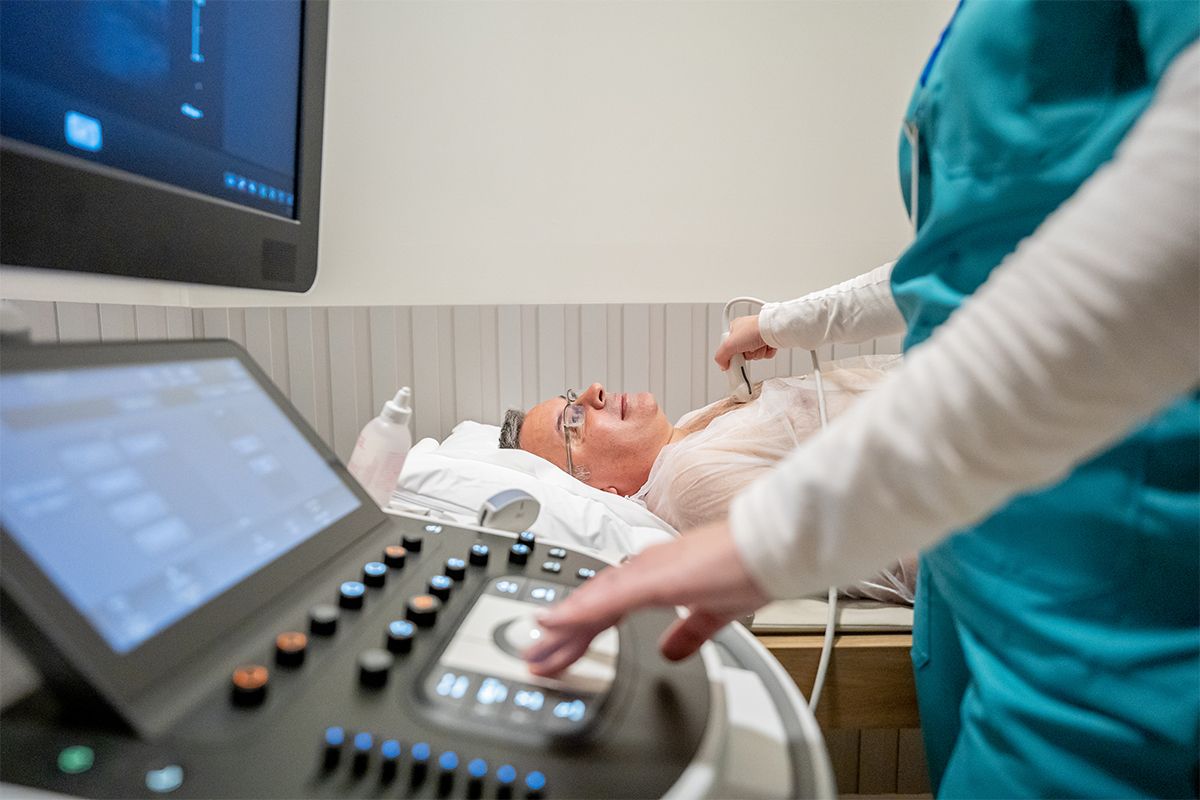
Our technologist will have you lie down on a specialized table and apply a small amount of gel to your chest. The imaging is done with a transducer, or wand, which the technician moves over the gel to capture images.
How Long Does the Test Take and What You’ll Feel
The actual time will vary, but it shouldn’t take more than 30 minutes from start to finish. You will feel no pain, only slight pressure from the wand on your skin.
Why Echocardiography Is Safe and Radiation-Free
Because an echocardiogram uses sound waves, there is no radiation. This makes it a very safe option for screening and monitoring heart and lung health.
Understanding Your Echocardiogram Results
Your results help your provider map out your future care.
How Radiologists Interpret the Images
At NVRA, a board-certified radiologist reviews the scans. The specialists look at the density, movement, and measurements of the heart structures and assign clinical meaning for your doctor to review.
What Happens After Your Exam Is Completed
Once the radiologist interprets the test, a report goes to your referring physician. Your doctor will go over the results with you and help you understand what they mean.
How Results Guide Next Steps in Care
Based on the results, the physician may prescribe new medications and help you make lifestyle changes that improve your health. The test may also show that you simply need regular monitoring to rule out future issues.
Why Patients Choose NVRA for Echocardiography
At NVRA, we combine technical excellence with a patient-first approach.
Advanced Cardiac Imaging at the Southbury Location
We are proud to offer advanced imaging services to patients using ACR-accredited equipment. Our Southbury location provides the highest standard of echocardiography testing.
Board-Certified Radiologists and Experienced Technologists
In addition to state-of-the-art technology, our team comprises board-certified physicians and technologists who guide you through the testing process. They will help you understand each step of the test.
Patient-Focused Care and Clear Communication
We believe clarity is essential in healthcare. We provide transparency for every service and pricing for those who self-pay. Our goal is to make preventive screening accessible and stress-free. To schedule echocardiography or other radiology services, contact Naugatuck Valley Radiology today.